Motivating operators
through data.
Designing a performance optimization product for heavy-machine operators at Finning — the world's largest Caterpillar dealer — using IoT data to drive productivity and safety at mining and construction sites.
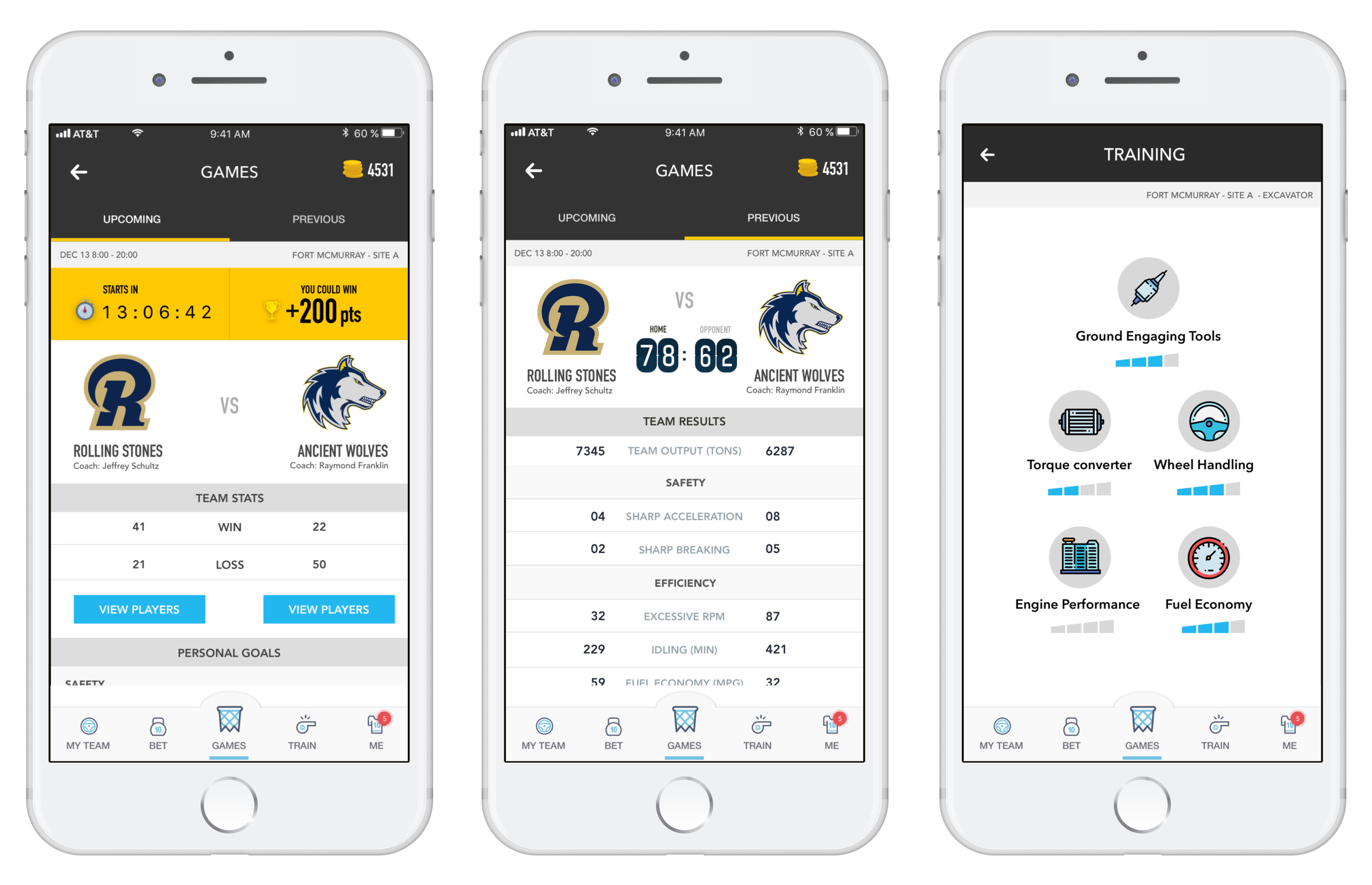
A flood of IoT data, and operators who weren't using it
Finning's heavy-machine equipment generates a constant stream of performance data through connected IoT devices. Operations managers had access to this data — but no good way to act on it. And the operators themselves had no visibility into their own performance at all.
The brief: design a product that would motivate operators to improve productivity and safety adherence, while making it easier for managers to turn IoT data into meaningful decisions. As the only designer in a pod of 10 engineers, 2 business analysts, and a PM, I owned the problem discovery and product vision end-to-end.
Understanding a world I'd never worked in
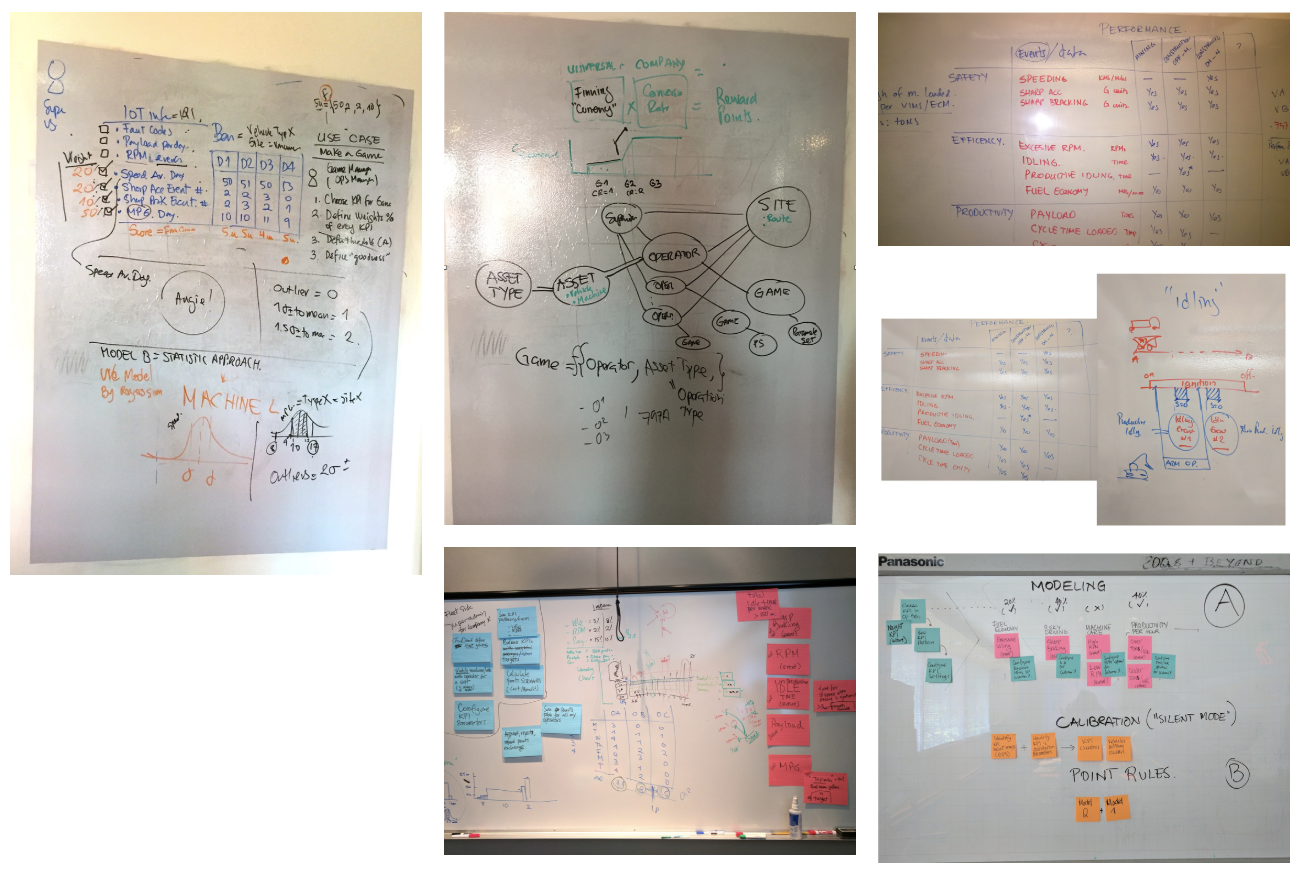
Mining and construction were entirely new domains. I spent significant time in workshops and deep-dives with SMEs to understand how Caterpillar equipment works, where performance data comes from, and what operators actually experience on a 12-hour shift. That context was essential before I could talk to users meaningfully.
Three distinct user groups — with very different needs
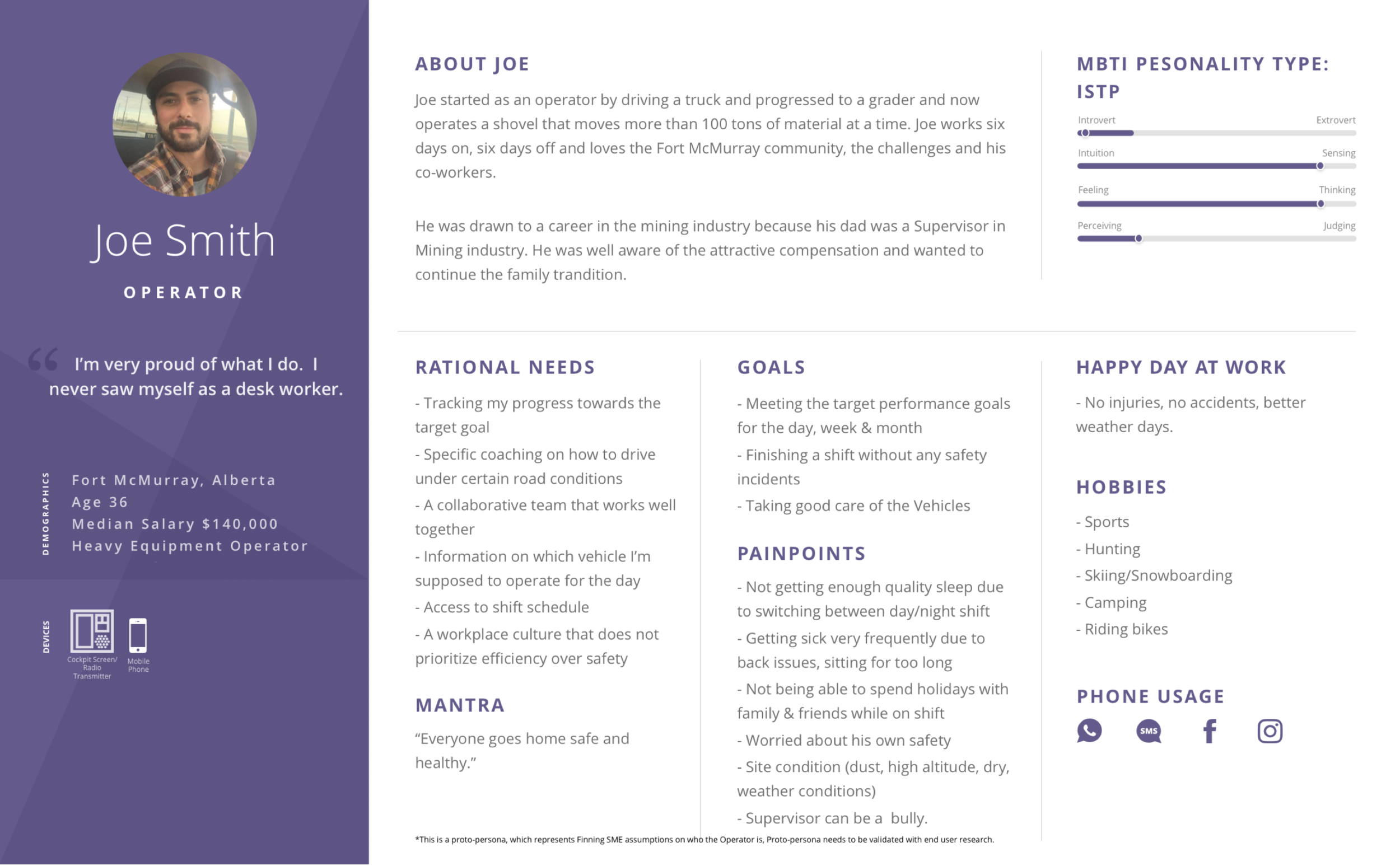
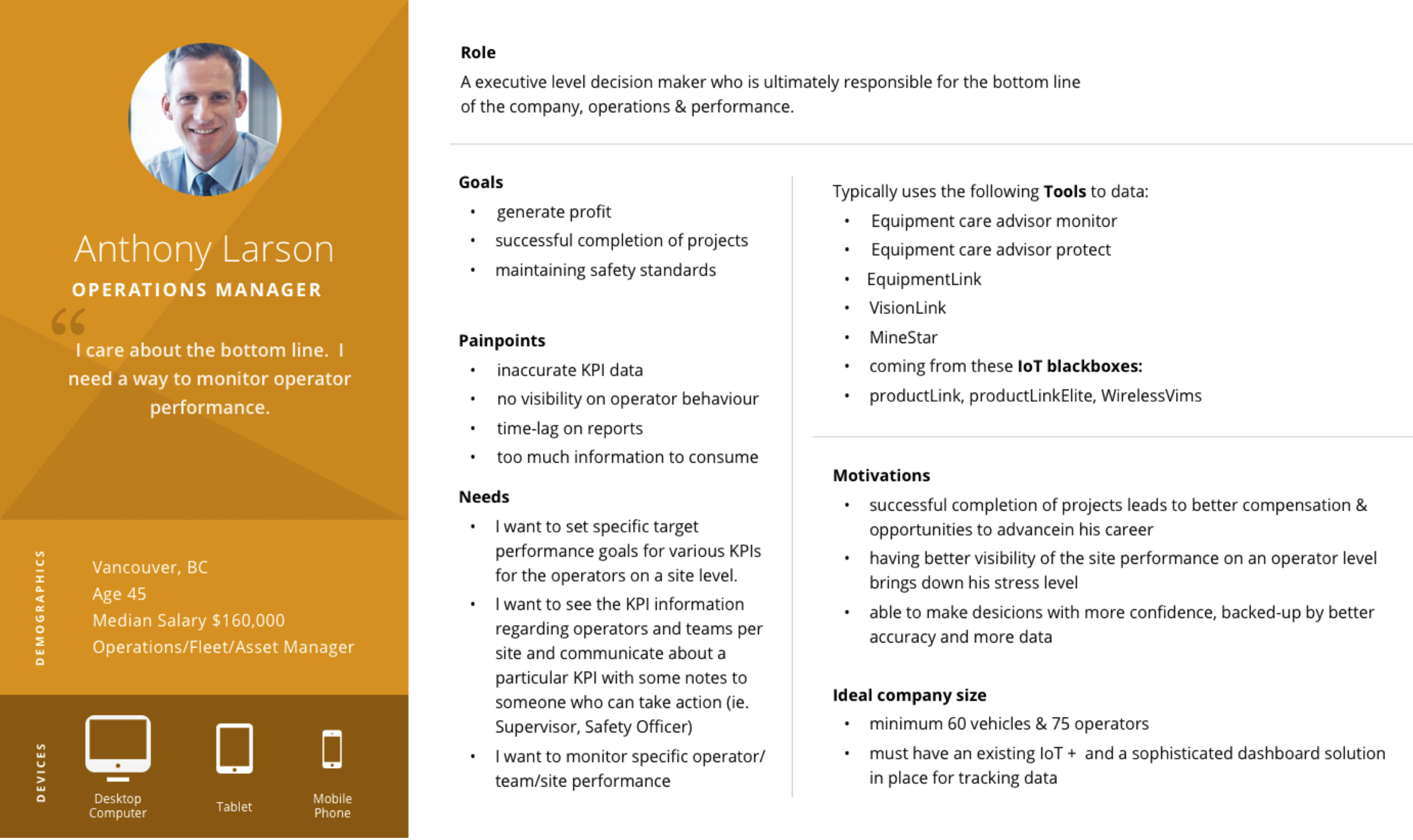
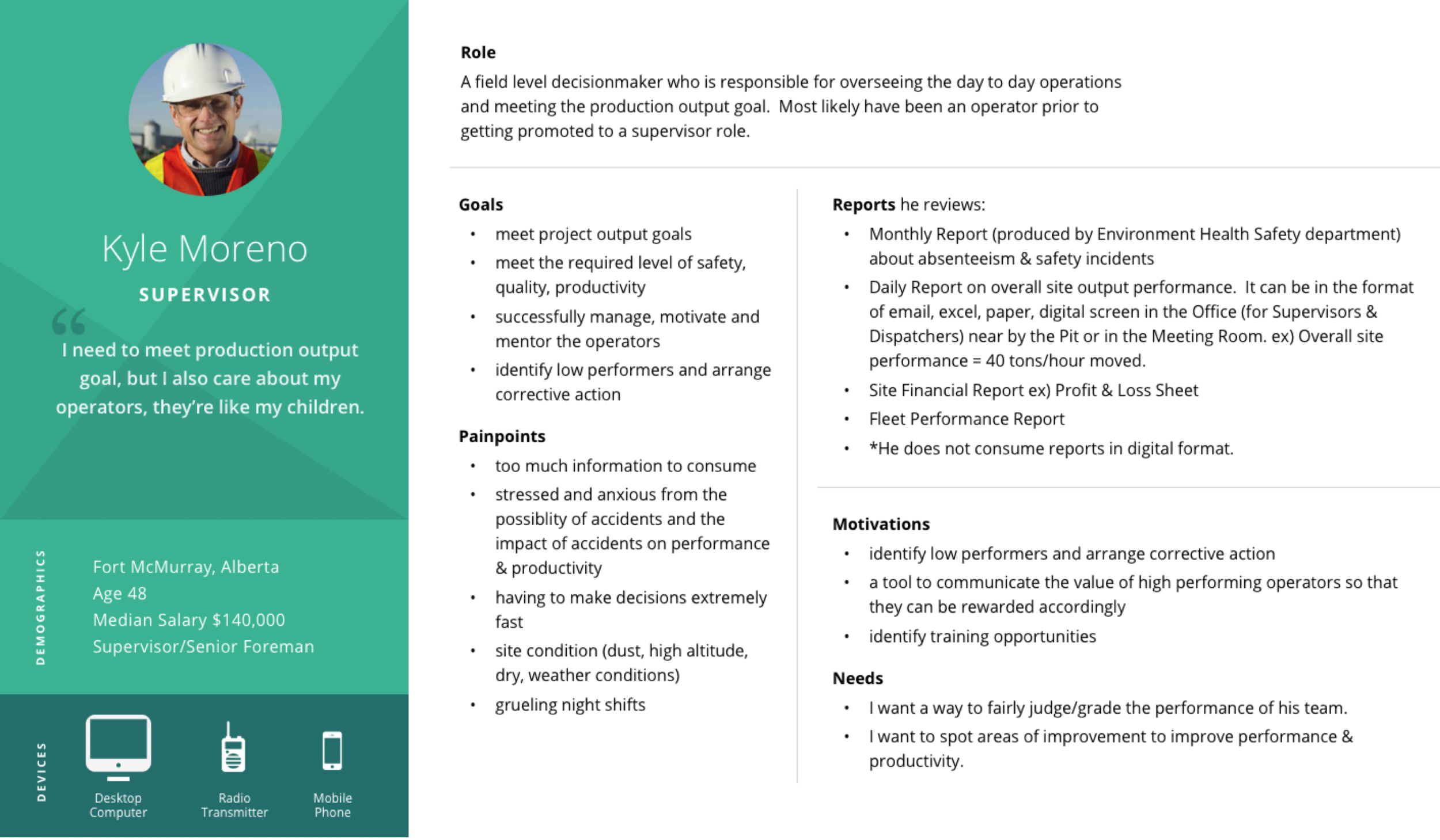
Through interviews with SMEs and target users, I identified three distinct personas: the heavy-machine operator, the supervisor, and the operations manager. Each had different relationships to performance data, different motivations, and different constraints — a 12-hour shift with minimal phone access versus a manager reviewing dashboards in an office.
Motivation isn't one-size-fits-all
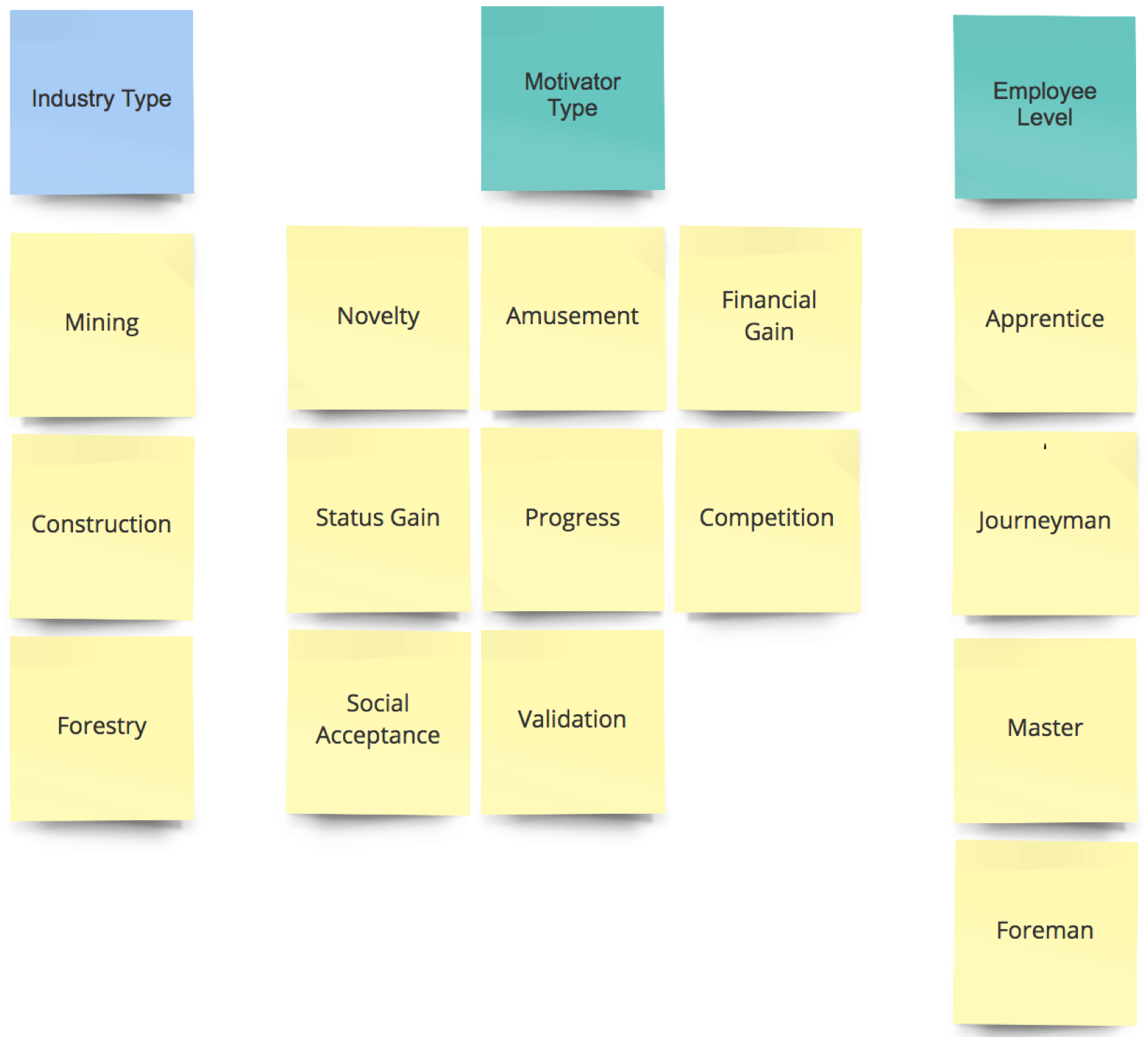
Interviews made it clear that operators are motivated by different combinations of factors. Using a behaviour design framework, I broke motivation down into specific categories — then mapped which operator types would respond to which motivators. This became the foundation for the product's engagement model.
Mapping the day in the life
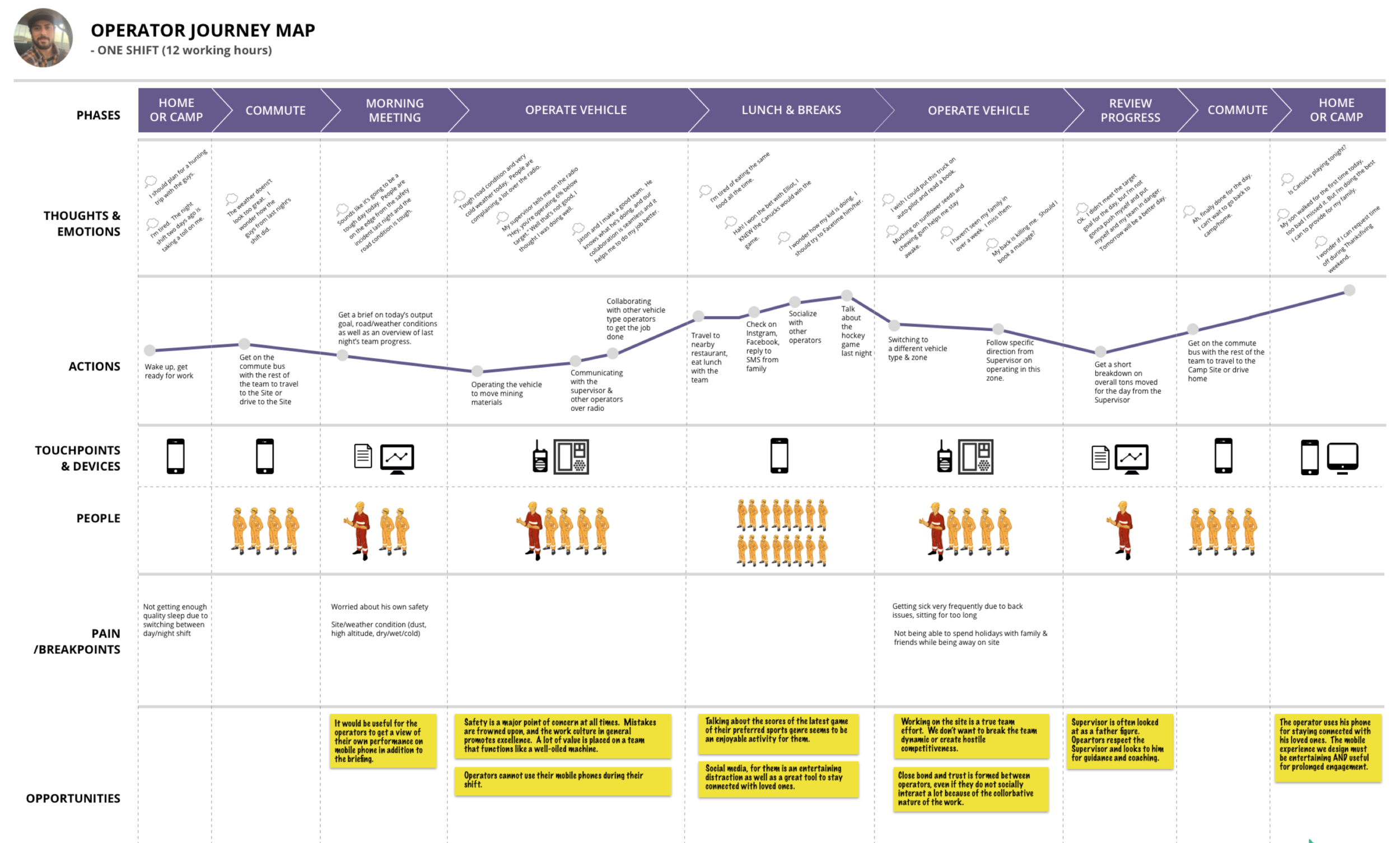
Understanding the operator's daily rhythm was critical — when they'd have phone access, when they'd be in the cab, when they'd be most receptive to engagement. The journey map shaped both the product's interaction model and its timing logic.
From hypotheses to high-fidelity
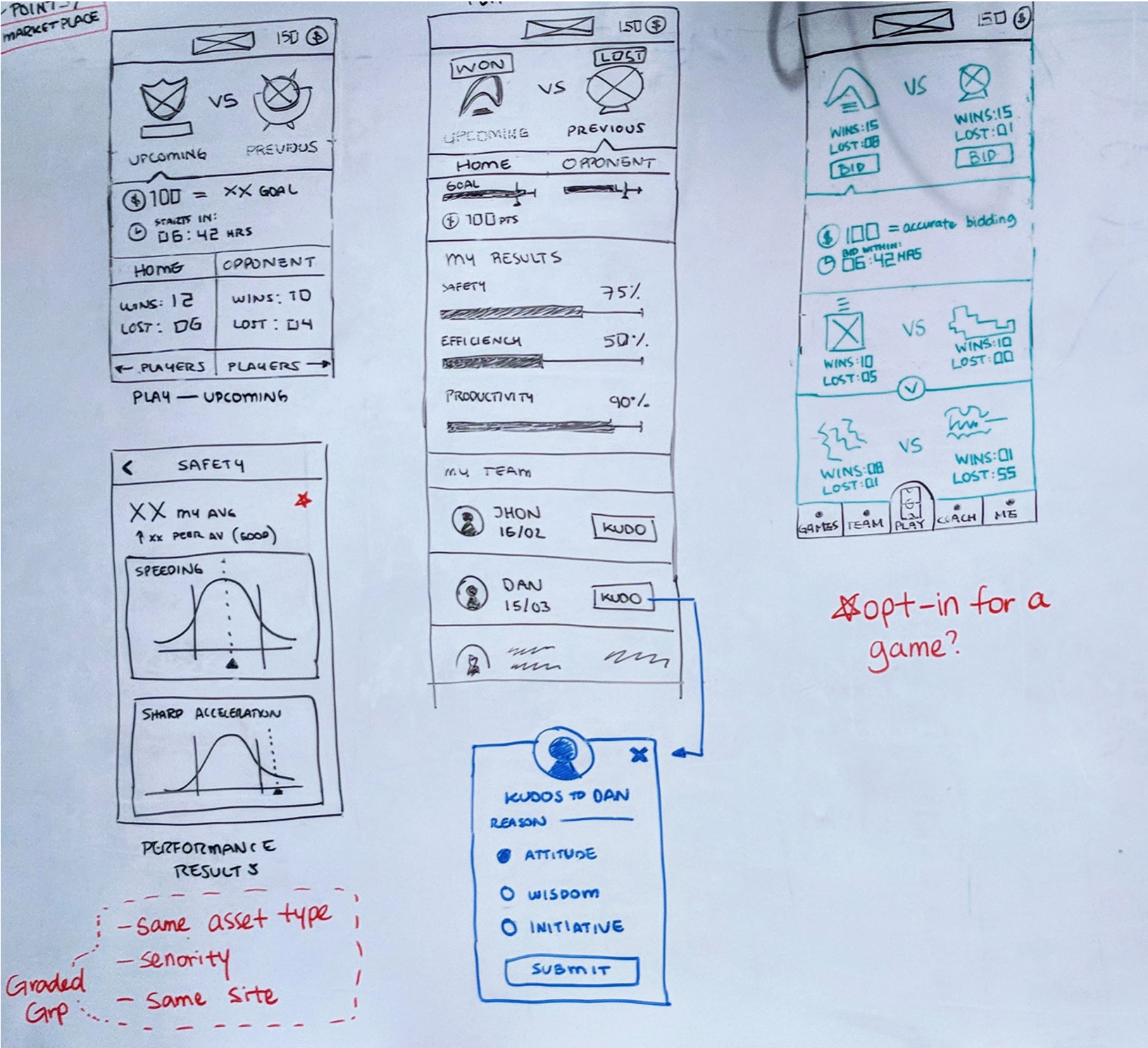
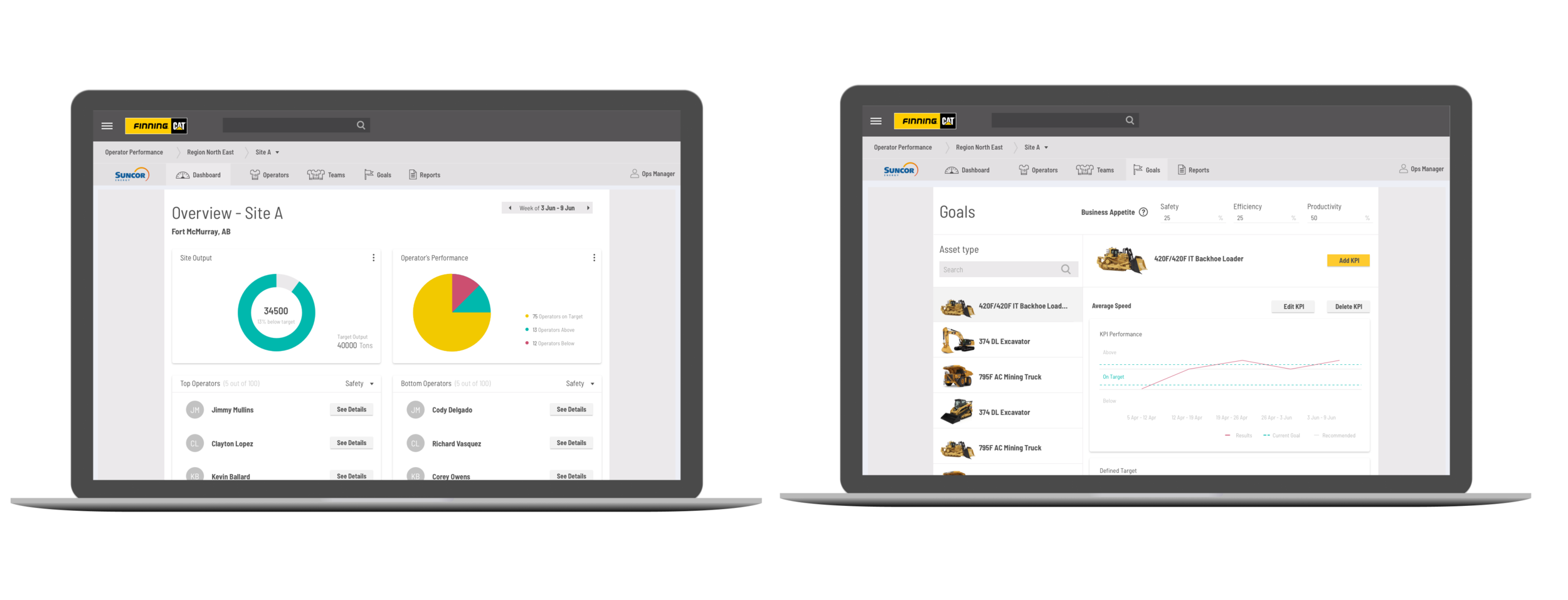
With the research validated by stakeholders, I moved from sketches to high-fidelity UI explorations — designing both the operator mobile experience and the manager dashboard. The mobile product was built around quick, rewarding daily check-ins; the dashboard gave managers a clean view into team performance trends.
What this project taught me
This was a concept that didn't ship — but the research process was one of the most rigorous I've done. Designing for a domain I knew nothing about forced me to become genuinely curious about how equipment works, how IoT data flows, and what motivates people in physically demanding jobs. That depth of domain understanding is what made the product hypotheses defensible.
The biggest lesson: organizational sensitivity (unions, safety culture) isn't a constraint to work around — it's a design input. The framing of the product as operator empowerment rather than management surveillance wasn't just ethical, it was what made the concept viable at all.