Digitizing subscriptions
for 29 states.
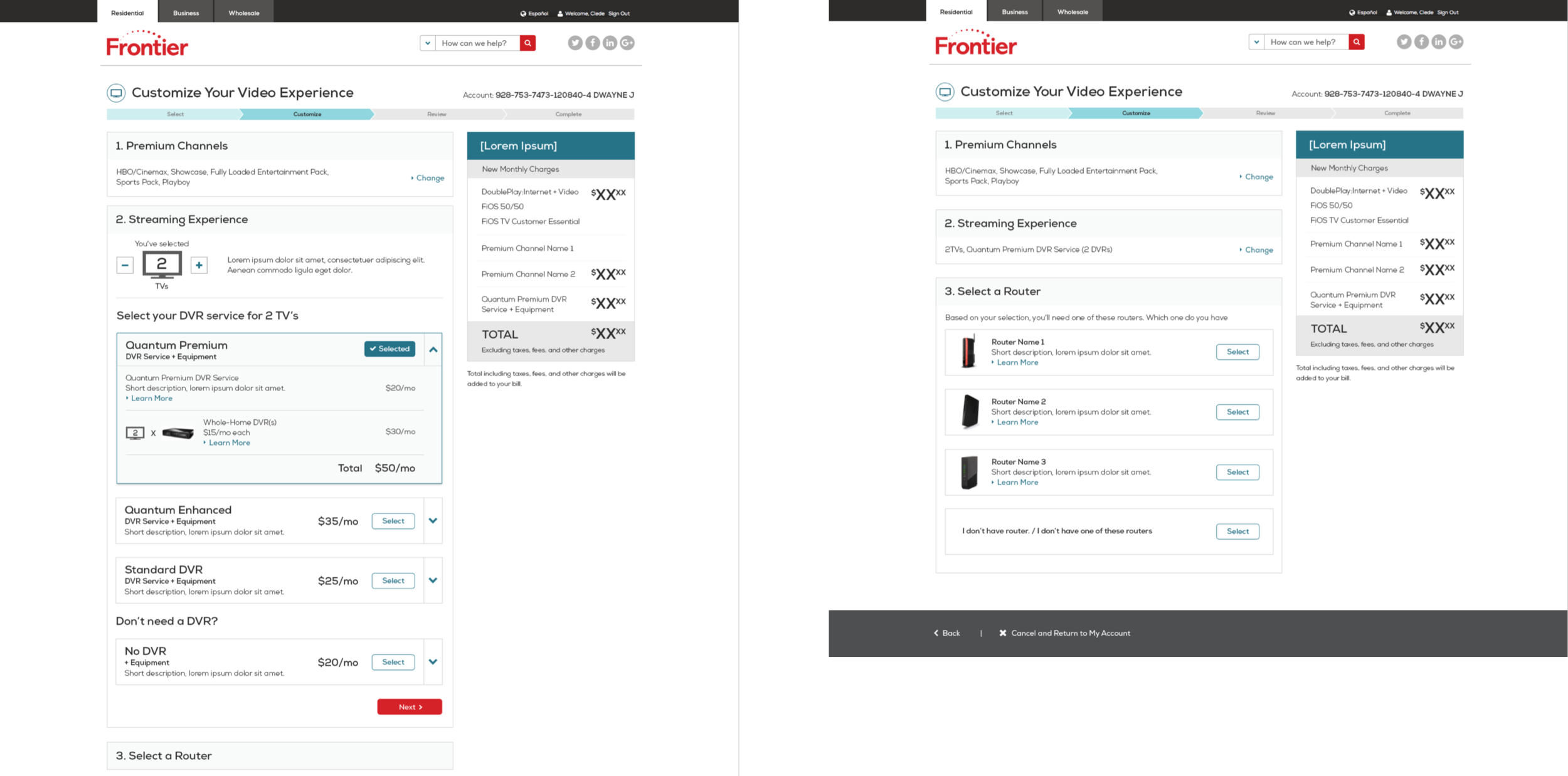
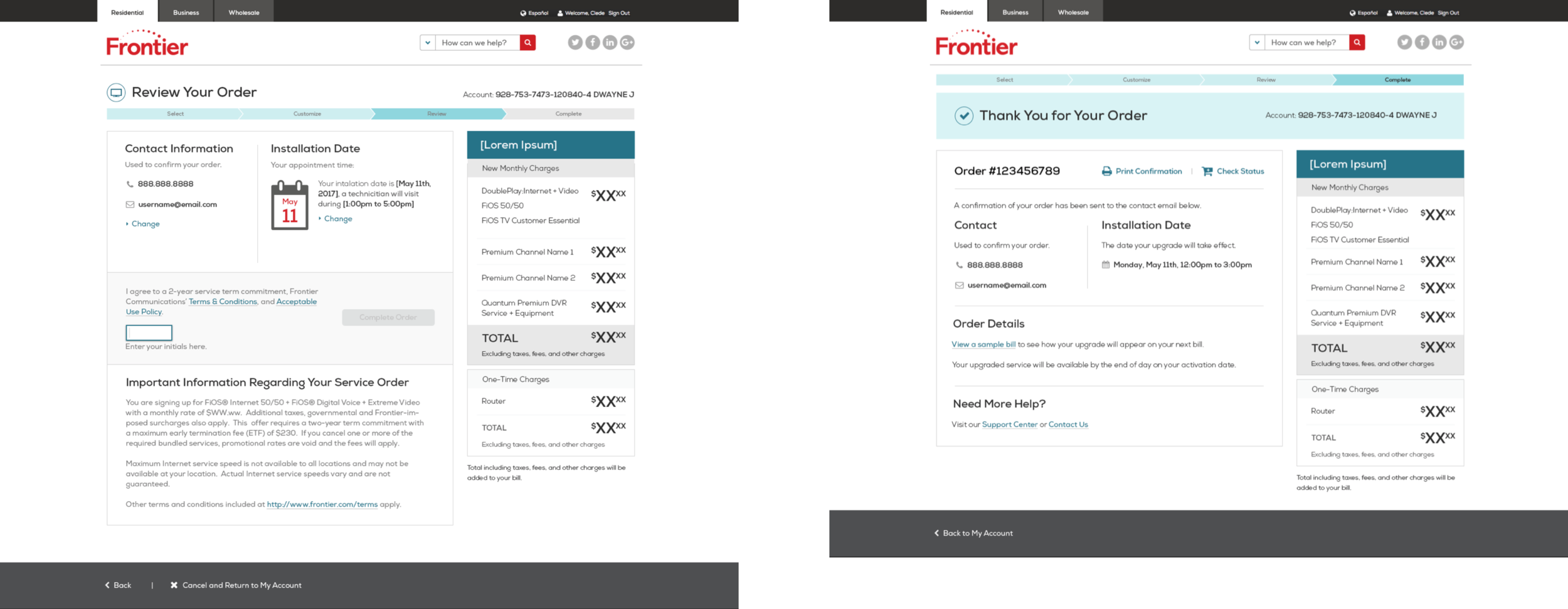
Building Frontier Communications' first digital subscription platform from scratch — letting customers across 29 US states subscribe to cable, internet, and phone plans without calling an agent.
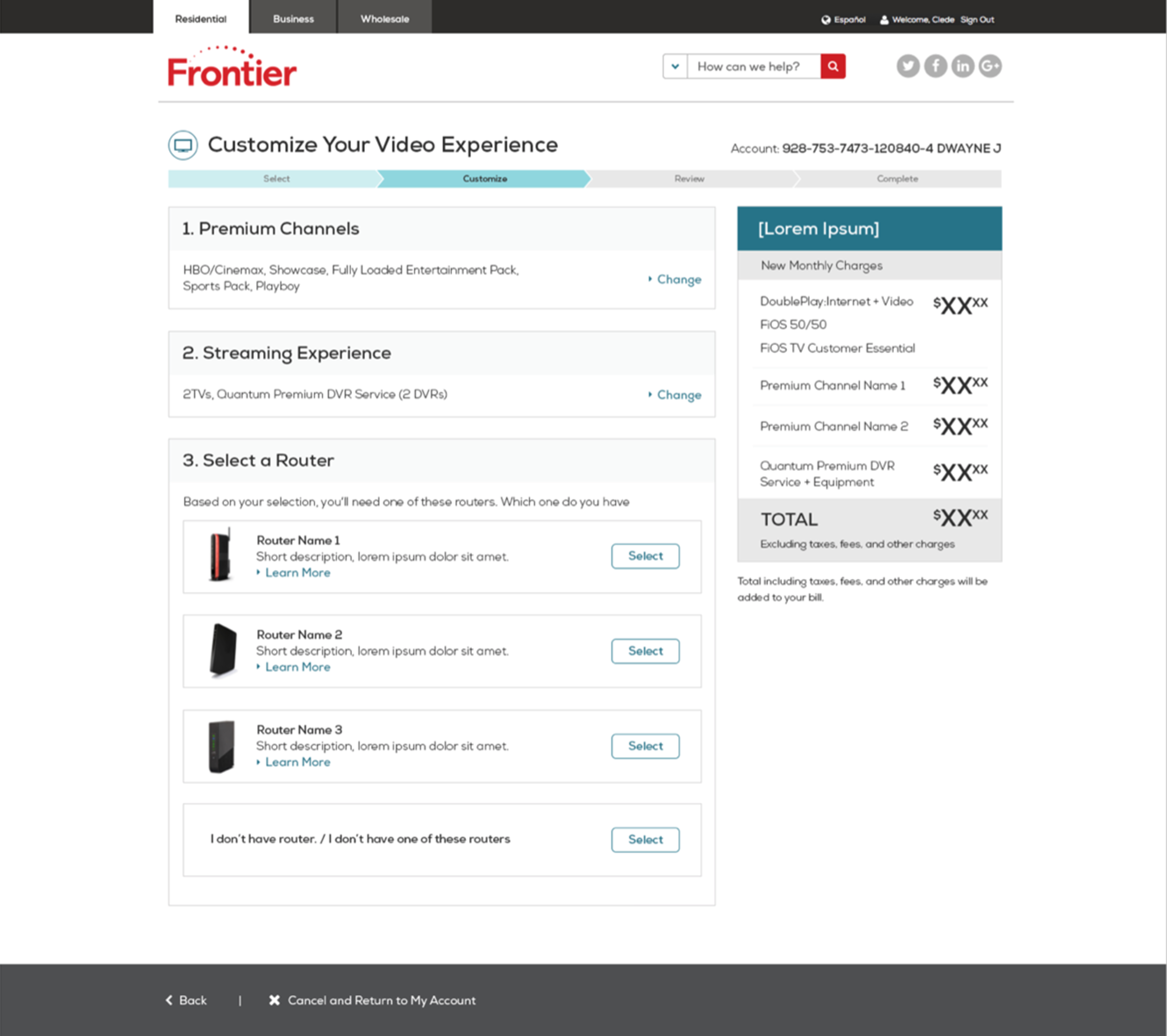
A $5B company with no digital platform
Frontier Communications — the fourth largest telecom provider in the US — had no digital subscription experience. Every customer who wanted to sign up for cable TV, internet, or phone had to call an agent. With Frontier in aggressive acquisition mode absorbing Verizon customers across 29 states, that needed to change fast.
As the only designer in the pod, I was responsible for distilling enormously complex business rules — different product tiers, pricing, and availability per state, across three service types — into a coherent, self-serve purchase experience.
Every state, every service, every combination
The complexity wasn't just visual — it was structural. Products available varied by state. A customer could have up to 3 services (Cable TV, Phone, Internet) bundled together. Business rules from legal, sales, API, content, and marketing all had to be reconciled into a single user flow. I collaborated across all of these teams to define the scenarios and get alignment on the ideal flow for each.
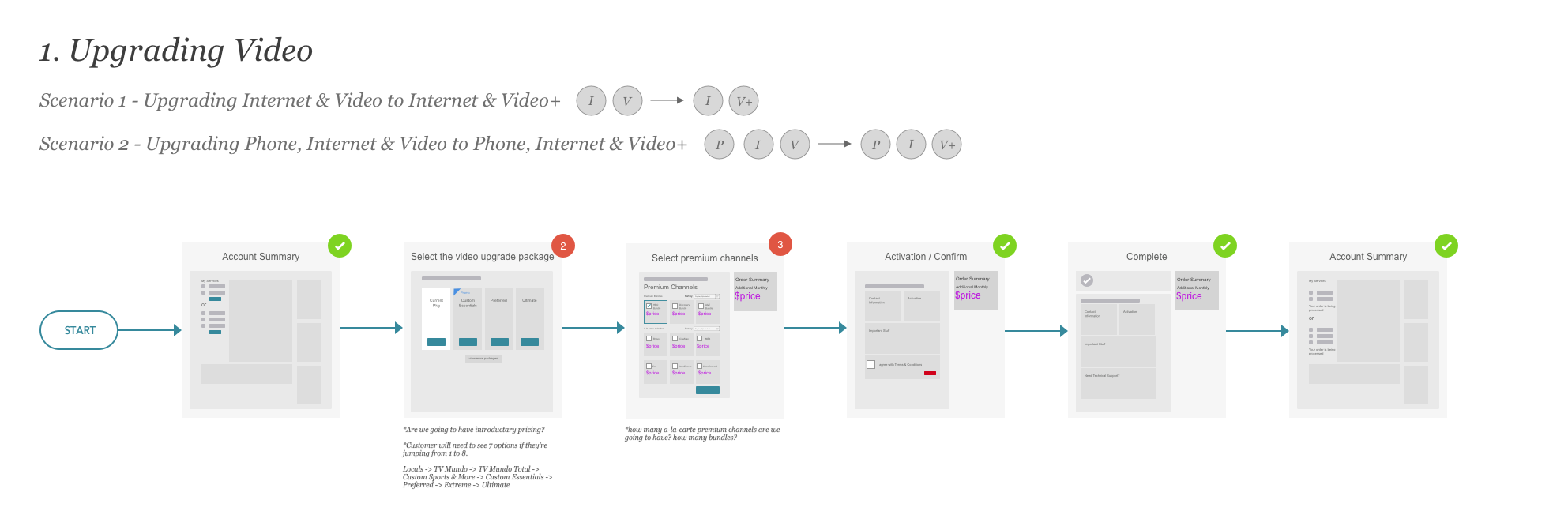
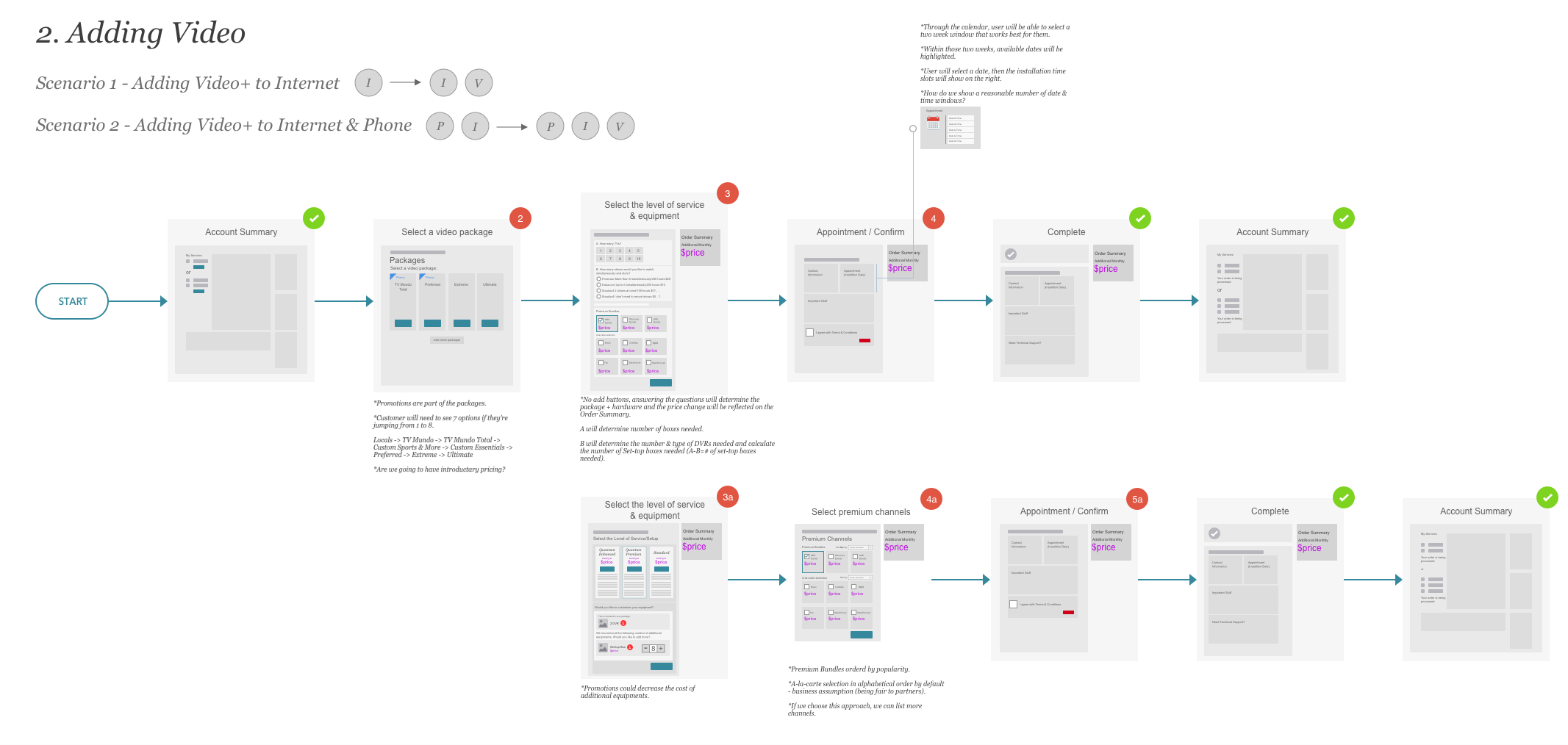
10 iterations in 8 weeks
Requirements changed constantly as discovery continued. I produced 10 major iterations across all user flows in 8 weeks — sometimes hand-sketching UI elements to communicate desired interactions quickly, then moving to high-fidelity once alignment was reached.
Managing feedback across distributed teams with conflicting viewpoints was the hardest part. Every business line within Frontier had a stake in the outcome — and getting to a shippable design meant facilitating those debates rather than just designing in isolation.
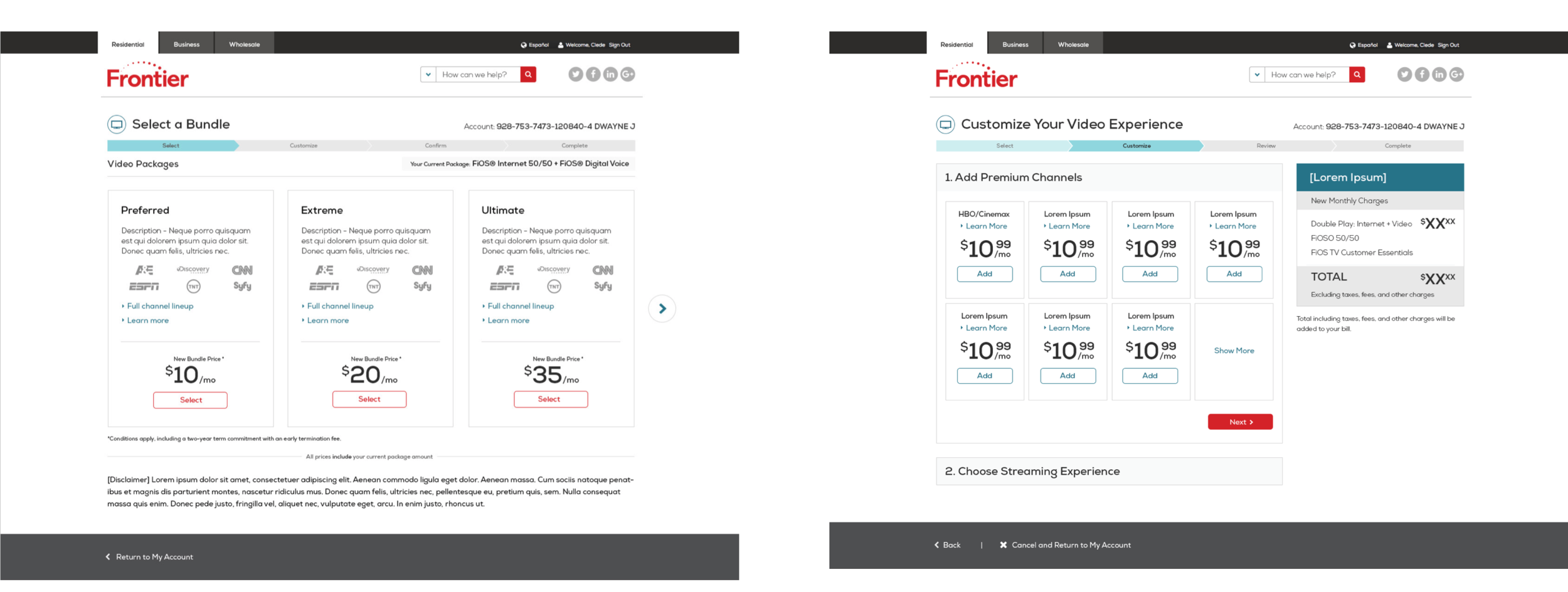
Testing two approaches to a complex selection problem
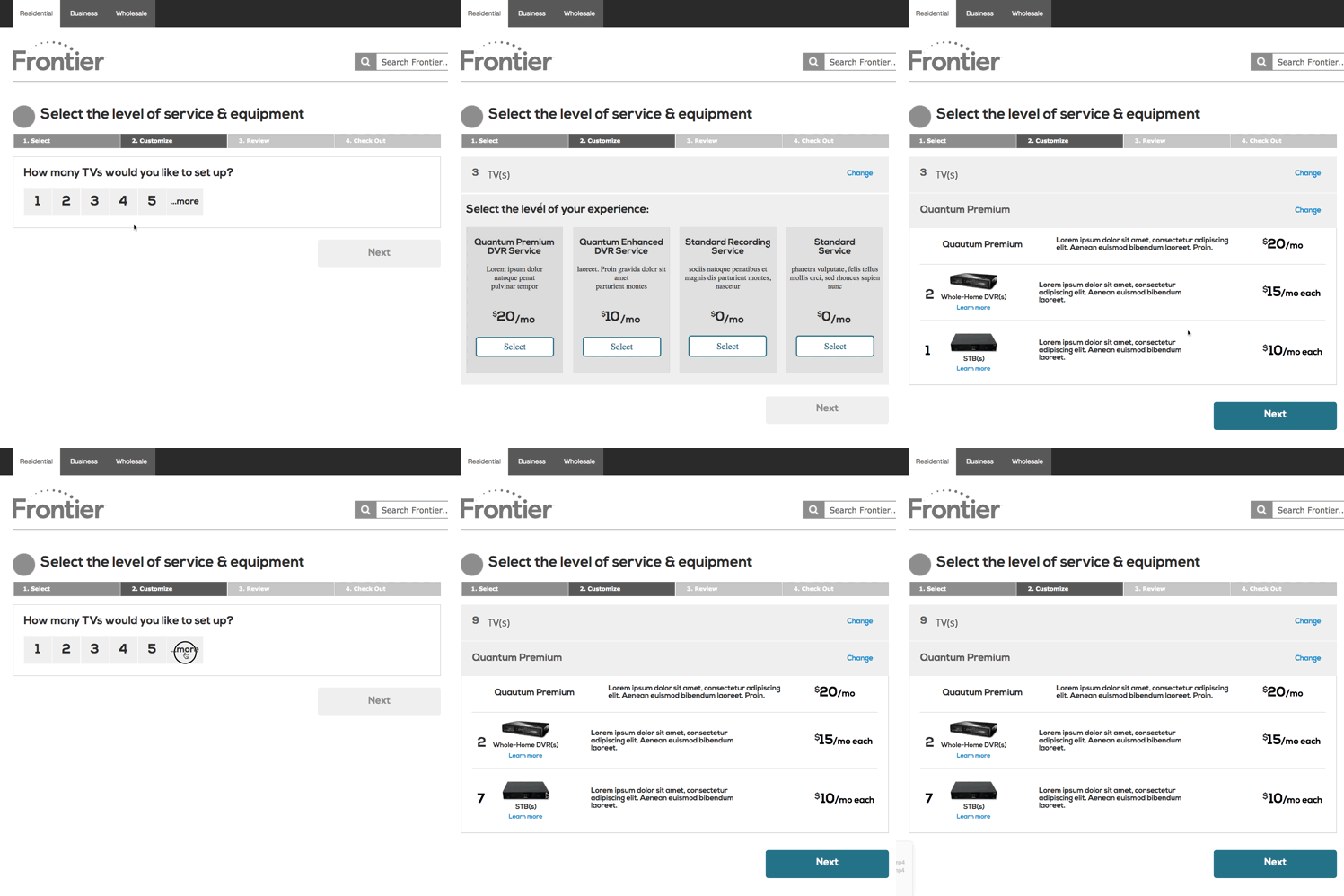
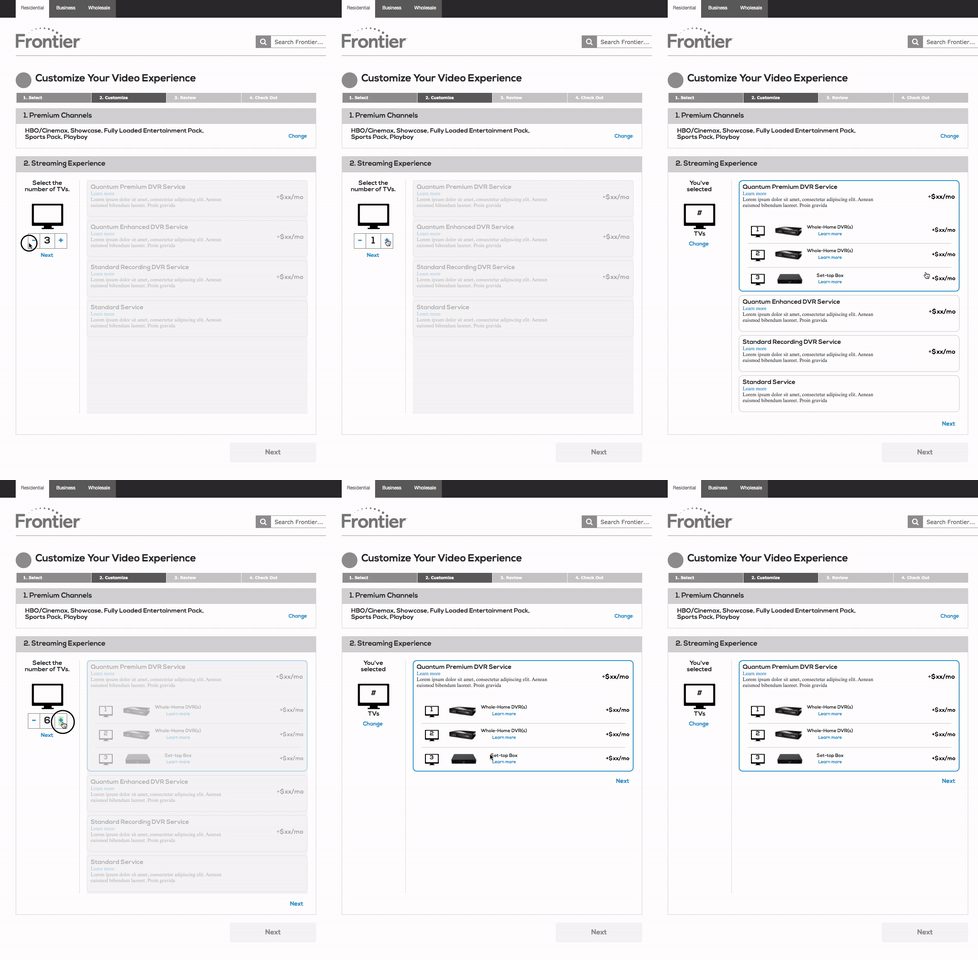
Cable packages had many tiers and business rules. I built two interactive prototypes with different interaction models for the package selection flow — then ran A/B testing with users to determine which approach was both more usable and acceptable to stakeholders.
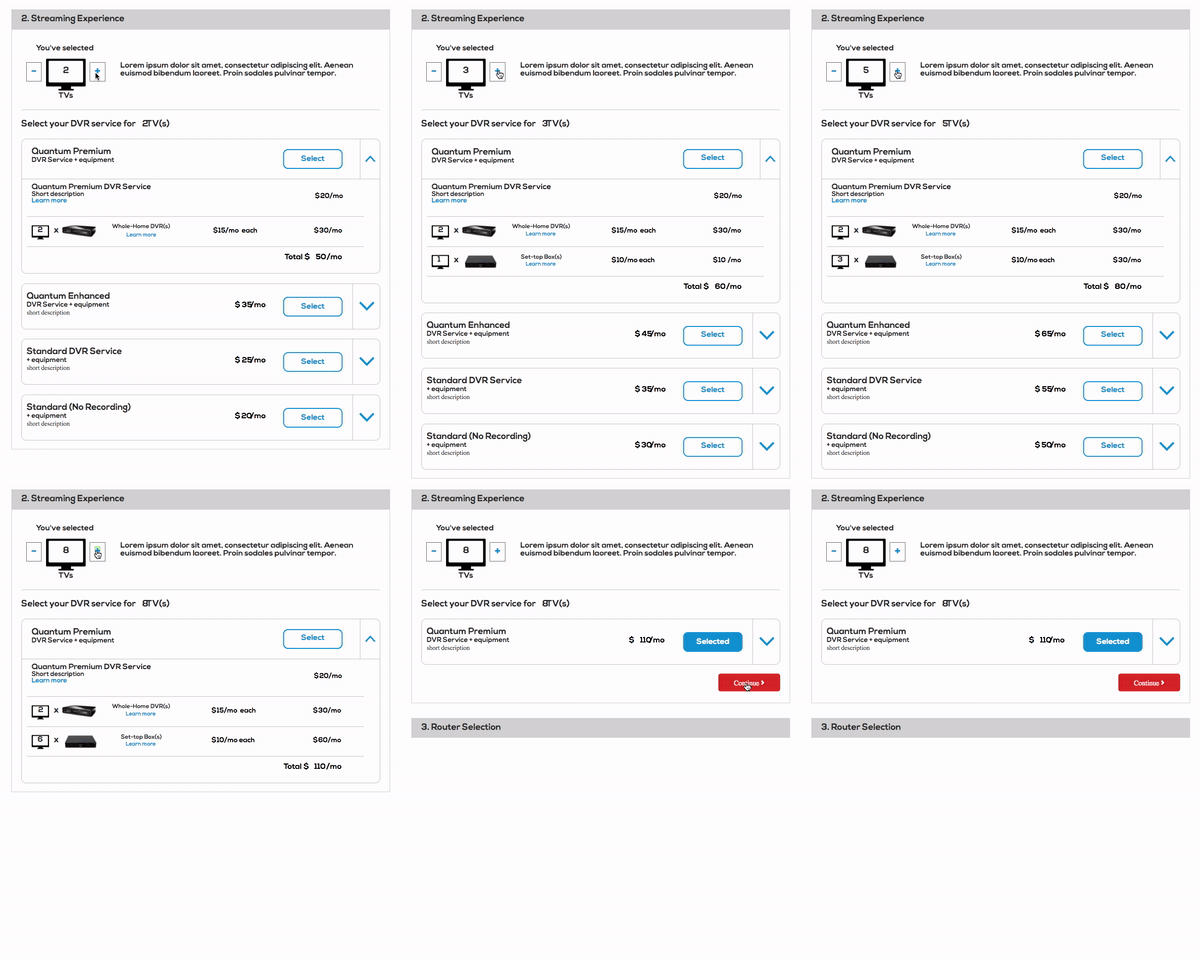
Self-serve subscriptions across 29 states
Designing under constraint
This project taught me that the design work is often the easier part. The harder skill is coordinating alignment across many distributed teams with conflicting priorities — moving the work forward without losing anyone along the way.
Shipping incredibly complex features in a tight timeframe, across 29 states, from a remote team in Vancouver — that required precise communication and a willingness to make confident decisions with incomplete information.