AI Chat Patterns
Designing the interaction framework for Dayforce's first agentic AI experience—establishing reusable patterns for how users communicate with intelligent systems
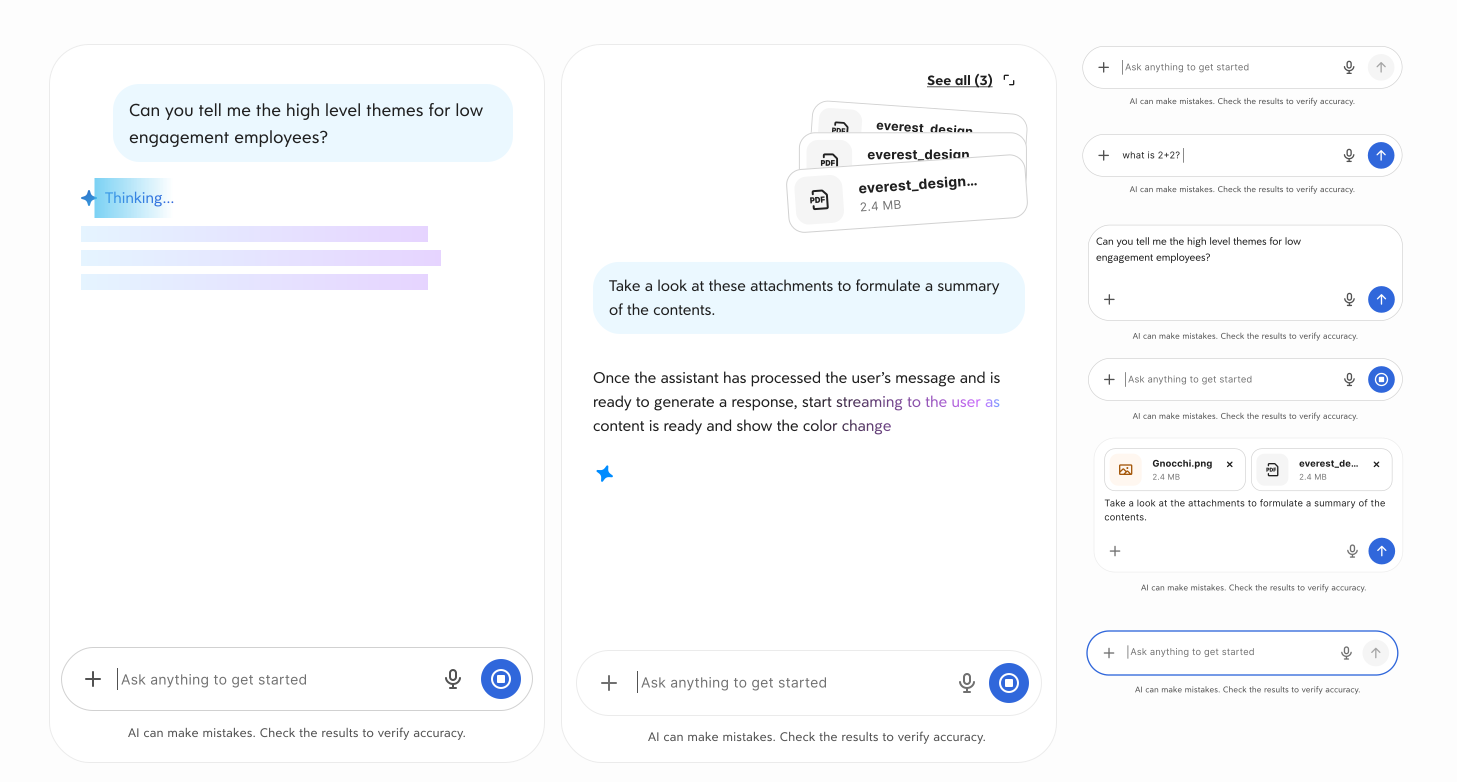
No patterns for intelligent UI
When Dayforce launched AI capabilities, every product team interpreted "AI experience" differently. Some shipped chatbots. Some added magic buttons. Some built inline suggestions. The result: a fragmented, inconsistent AI layer with no shared mental model for how users should interact with agentic features.
The deeper problem: AI interactions don't follow the same rules as traditional UI. Users needed to understand what the AI can do, what it's doing right now, and when to trust its output—none of the existing design system components handled this.
A reusable AI interaction framework
Built on the existing token foundation
Rather than building a parallel AI component library, I extended the Everest Design System token architecture to accommodate AI-specific states. New semantic tokens for AI contexts (ai.surface, ai.border.active, ai.text.streaming) slotted into the existing three-tier hierarchy—keeping the system coherent rather than forked.